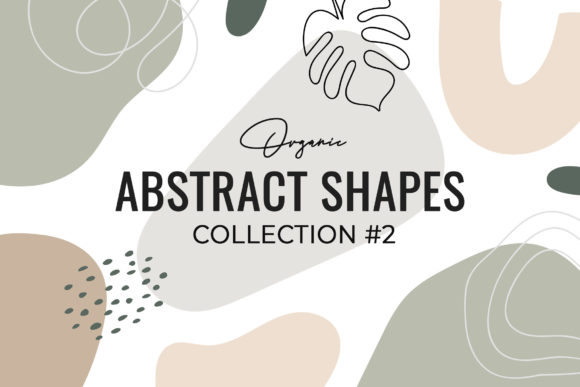
Organic Abstract Shapes 2: A Practical Evaluation for Modern Design Projects
In the evolving landscape of digital design, finding assets that balance creativity with technical efficiency is a constant challenge. Organic Abstract Shapes 2 has emerged as a significant resource for professionals and hobbyists alike who seek to incorporate fluid, natural forms into their work. Unlike rigid geometric patterns or standard vector libraries, this collection focuses on the irregularity found in nature, offering a distinct aesthetic that aligns with contemporary trends in modern art. This evaluation explores what makes this specific collection stand out, how it compares to other design approaches, and whether it fits your specific workflow requirements.
Understanding the Core Offerings
The fundamental value of Organic Abstract Shapes 2 lies in its comprehensive library of over 60 distinct abstract shapes. These are not merely decorative afterthoughts; they serve as foundational elements for creating dynamic compositions. The collection includes decorative elements, titles, strokes, and lines that mimic the unpredictability of natural forms. Each shape is provided in .SVG format, ensuring that designers can scale the graphics to any size without losing resolution or introducing pixelation. Furthermore, the inclusion of transparent backgrounds means these elements can be layered seamlessly over photographs, gradients, or solid colors without complex masking processes.
Beyond individual shapes, the package provides immediate utility through pre-made arrangements. There are 12 premade layouts included in .SVG files, separated for easy customization. For users who prefer a more static approach, the collection also offers two premade background images in .JPG format (1363 × 1948px). This hybrid approach—offering both editable vectors and ready-to-use raster images—addresses different stages of the design process, from initial brainstorming to final export.
Technical Flexibility and Workflow Integration
One of the primary considerations when selecting design assets is compatibility with existing software ecosystems. Organic Abstract Shapes 2 excels in this area due to its reliance on industry-standard formats. The .SVG files are universally recognized by web editors, allowing for rapid integration into online tools where changes can be made in seconds. This capability is particularly beneficial for those working under tight deadlines who need to adjust color palettes, resize elements, or overlay text without leaving their browser.
For desktop professionals, the versatility extends to major graphic design platforms. Whether you are using Adobe Illustrator, Photoshop, CorelDraw, or Inkscape, the files integrate smoothly. This broad compatibility ensures that the asset is not locked into a single proprietary ecosystem. Designers can manipulate the paths, groupings, and attributes of the shapes just as they would with any custom-created vector. The ability to edit these files allows for a level of personalization that stock photos often cannot provide, making the collection a robust tool for branding and identity projects.
Comparative Analysis: Vector vs. Raster and Custom Creation
When evaluating Organic Abstract Shapes 2, it is helpful to compare it against alternative methods of achieving similar visual results. The most common comparison is between using a dedicated asset library versus creating organic shapes from scratch.
- Custom Creation: Creating organic shapes manually using pen tools or brush settings in software like Illustrator offers total control but requires significant time and skill. It is ideal for highly unique brand identities where no two elements should look alike. However, for projects requiring multiple variations or rapid prototyping, the time investment can be prohibitive.
- Raster-Based Libraries: Many collections offer only PNG or JPG files. While these are easier to use for quick mockups, they lack the scalability of vectors. Resizing a raster image for a large-format print often results in blurriness, limiting its application scope.
- Organic Abstract Shapes 2: This collection bridges the gap. By providing high-quality SVGs, it offers the flexibility of custom creation with the speed of a pre-packaged library. The "organic" nature of the shapes avoids the repetitive, mechanical look that sometimes plagues generic vector packs, while the transparency and separation of layers ensure they fit cleanly into complex designs.
Strengths, Tradeoffs, and Best-Fit Scenarios
No single resource is perfect for every situation. Understanding the strengths and limitations of Organic Abstract Shapes 2 helps determine if it is the right choice for your current project.
The primary strength is the trend alignment. The modern art style favored by many brands today leans heavily towards fluidity, softness, and natural inspiration. This collection delivers that aesthetic immediately. The inclusion of title and line elements adds a functional layer, allowing designers to create cohesive typographic treatments alongside the graphical elements. The ease of use is another significant advantage; uploading SVGs to online editors takes mere seconds, democratizing access to professional-grade design components for those who may not have advanced technical skills.
However, there are tradeoffs to consider. The collection contains 60 shapes and 12 arrangements. While generous, this number may feel limiting for a massive campaign requiring hundreds of unique assets. Additionally, because the shapes are pre-drawn, they share a consistent stylistic DNA. If a project demands extreme uniqueness where every element must look entirely hand-drawn and distinct, relying too heavily on a preset pack might result in a design that feels slightly generic upon close inspection.
This resource is best suited for:
- Web and Mobile Design: Where lightweight SVGs improve page load times and responsiveness.
- Social Media Content: Quick creation of eye-catching posts using the premade backgrounds and shapes.
- Brand Identity Systems: Establishing a modern, organic visual language for logos, packaging, or marketing collateral.
- Print Materials: High-resolution scaling ensures quality for brochures and posters.
Decision Factors: When to Choose This Collection
Choosing between Organic Abstract Shapes 2 and other options often comes down to the specific constraints of your project timeline and budget. If you are a freelancer managing multiple clients, the ability to quickly upload an SVG, change the color to match a client's brand guidelines, and add text is invaluable. The time saved on manual drawing translates directly to billable hours or reduced stress.
Conversely, if you are working on a highly conceptual art piece where the imperfection of the line is paramount, or if you require a very specific niche style that deviates significantly from the "modern art" trend, you might find the pre-defined shapes restrictive. In such cases, investing time in learning advanced vector manipulation techniques or commissioning custom illustrations might yield better long-term results.
Furthermore, the inclusion of the two .JPG backgrounds serves as a useful fallback. While vectors are superior for editing, sometimes a designer simply needs a textured backdrop to build a composition around quickly. Having these included adds practical value, reducing the need to search for additional texture resources.
Conclusion on Utility and Application
Organic Abstract Shapes 2 represents a thoughtful compilation of assets designed for the practical needs of the modern creator. It successfully balances the aesthetic demand for natural, flowing forms with the technical necessity of scalable, editable file formats. While it may not replace the need for custom illustration in every scenario, it offers a powerful starting point that accelerates the design process.
For professionals aged 20 to 50 who are constantly evaluating tools to enhance their productivity and output quality, this collection stands out as a versatile option. Its compatibility across various software platforms, combined with the user-friendly nature of SVG files, makes it a reliable addition to any digital toolkit. Ultimately, the decision to utilize this resource depends on the balance you strike between creative control and operational efficiency. If your goal is to produce trendy, high-quality designs rapidly without sacrificing the organic feel of the artwork, this collection provides a strong foundation for success.