Winter Plants Watercolor Clipart Evaluation
In the realm of digital design, selecting the right visual assets is a critical step in achieving a professional and cohesive look. The Winter Plants Watercolor Clipart collection represents a specific category of botanical illustrations designed to evoke the atmosphere of the colder months. This set features watercolor illustrations with decorative plant elements, offering a distinct aesthetic that blends natural realism with artistic softness. For designers, illustrators, and content creators, understanding the specifications and applications of this collection is essential before making a purchase or integration decision.
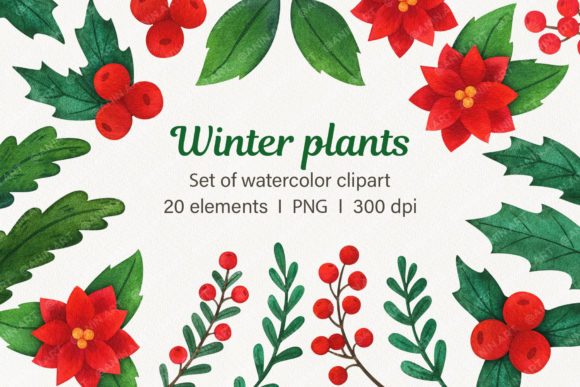
This evaluation explores the utility of this 20-piece clipart set, which includes high-resolution PNG files on transparent backgrounds. By analyzing the technical specifications, potential use cases, and limitations, readers can determine if this resource aligns with their specific project goals.
Understanding the Collection Specifications
The core value of any digital asset lies in its technical quality and versatility. This particular collection consists of 20 cliparts in PNG format. The choice of PNG is significant for graphic design workflows because it supports transparency. Unlike JPEG formats, which often require a white background box, these images allow the winter foliage to sit seamlessly over any color or texture. This feature is particularly advantageous when creating layered designs where the background needs to be customized.
Furthermore, the resolution is set at 300 dpi. In the printing industry, 300 dots per inch is the standard requirement for high-quality output. This ensures that the watercolor textures, brush strokes, and fine details of the botanical elements remain crisp and do not appear pixelated when printed on physical media. Whether the final output is a small gift tag or a large poster, the file size and resolution are sufficient to maintain professional standards.
The content of the set is curated around classic winter flora. The inventory includes:
- Holly: Recognizable by its serrated leaves and red berries, often associated with holiday traditions.
- Fir branches and needles: Providing structural depth and a sense of evergreen resilience.
- Poinsettia: A vibrant floral element that adds a focal point of color.
- General foliage and leaves: Offering variety in shape and density.
- Berries and flowers: Small decorative accents that enhance composition balance.
The inclusion of both structural elements like branches and delicate accents like berries allows for flexible arrangement. Designers are not limited to a single motif but can mix and match these components to create unique compositions.
Primary Applications and Use Cases
The versatility of the Winter Plants Watercolor Clipart makes it suitable for a wide array of projects. The most immediate application is in print media. Because of the 300 dpi resolution, these images are ideal for creating postcards, calendars, posters, and packaging. The watercolor style lends itself well to stationery, providing a warm, handcrafted feel that contrasts effectively with modern typography.
For businesses and individuals looking to produce merchandise, this collection serves as a foundational asset. It is explicitly noted as being suitable for tags, stickers, gift designs, and souvenirs. The transparent background simplifies the process of placing these designs onto product mockups without needing complex masking tools. A designer can easily overlay a holly branch onto a coffee cup label or a fir branch onto a tote bag design.
Digital marketing also benefits from this asset class. Social networks frequently favor high-quality imagery that captures attention quickly. These botanical elements can be used to frame content, create headers, or serve as decorative borders in digital newsletters. The organic nature of the watercolor style helps break up the rigid lines of digital interfaces, adding a touch of elegance and seasonality.
Evaluating Benefits and Tradeoffs
When considering this collection, it is important to weigh the advantages against potential limitations. The primary benefit is the cohesive aesthetic. Since all 20 elements are part of a single collection, they share a consistent color palette, brush style, and level of detail. This uniformity reduces the time spent searching for matching assets from different sources, streamlining the design workflow.
Another significant advantage is the ease of use. The pre-made PNG files eliminate the need for users to have advanced illustration skills to create these elements from scratch. This democratizes access to high-quality botanical art, allowing hobbyists and professionals alike to incorporate complex textures into their work efficiently.
However, there are tradeoffs to consider. The fixed nature of clipart means less flexibility compared to vector graphics (such as SVG or AI files). If a user needs to drastically alter the shape of a leaf or change the color of a berry beyond simple filters, the raster-based PNG format may limit those options. Editing a watercolor image often involves painting over pixels rather than manipulating geometric paths. Additionally, the set is finite; with only 20 items, users might find themselves needing more variety for larger-scale projects, requiring them to supplement this set with other resources.
Situational Fit: When to Choose This Collection
This collection is a strong fit for projects that prioritize aesthetic warmth and seasonal recognition. If the goal is to create a design that feels personal, artisanal, or traditional, the watercolor medium is superior to flat vector icons or photorealistic stock photography. It works exceptionally well for:
- Holiday Greeting Cards: Where the soft edges of watercolor mimic the sentiment of handwritten notes.
- Product Packaging: Particularly for organic or handmade goods where the "natural" look is a selling point.
- Event Invitations: Such as winter weddings or parties, where an elegant, non-digital look is desired.
- Educational Materials: Books or worksheets about botany or seasons, where clear, recognizable plant illustrations are needed.
It is also ideal for users who need quick turnaround times. The ready-to-use nature of the files allows for rapid prototyping and finalization of designs without the learning curve associated with drawing or complex photo editing.
When to Consider Alternatives
Despite its strengths, this collection may not be the best choice for every scenario. Users requiring scalability should consider vector formats. If a design must be resized from a business card to a billboard without any loss of quality, a raster image like this PNG set will eventually become pixelated. In such cases, purchasing a vector version of similar botanical elements would be more prudent.
Additionally, if the project demands a highly specific color scheme that does not match the provided palette, the limitations of the fixed colors become apparent. While color adjustment tools exist, altering the hue of a detailed watercolor texture can sometimes result in unnatural-looking results. Designers working with strict brand guidelines that require exact Pantone matches might find it easier to start with vector shapes or custom photography.
Finally, for projects requiring extensive customization, such as animating the falling snow or making the leaves sway, static clipart is insufficient. In scenarios involving motion graphics or interactive web design, animated assets or source files that allow for individual element manipulation are necessary.
Practical Decision-Making Insights
To determine if the Winter Plants Watercolor Clipart aligns with your goals, evaluate the intended output medium first. If the project is primarily for print or static digital display where 300 dpi is sufficient, this collection offers excellent value. The combination of transparency, high resolution, and thematic consistency provides a robust toolkit for seasonal design.
Consider the scope of your library needs. If you are building a long-term asset library, a single set of 20 images may serve as a starting point but likely requires expansion. However, for a one-off project, such as a specific calendar year or a batch of holiday cards, the comprehensiveness of this set is likely adequate.
Ultimately, the decision rests on the desired visual tone. If the objective is to convey a sense of organic beauty, tradition, and softness associated with winter flora, this collection delivers. By understanding the balance between the convenience of ready-made assets and the flexibility of editable vectors, designers can make informed choices that enhance their creative output without unnecessary compromise.