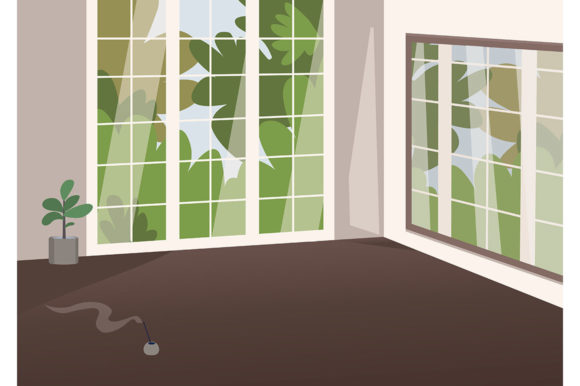
Unlocking Potential with the Empty Spacious Room Flat Color Vector
In the rapidly evolving landscape of digital design, finding assets that balance simplicity with professional utility is a constant challenge. Designers often struggle to create backgrounds that are versatile enough for various projects without being visually overwhelming. This is where the Empty spacious room flat color vector illustration becomes an indispensable tool. By providing a clean, uncluttered canvas, this specific type of graphic asset allows creators to focus on content rather than fighting against complex textures or busy patterns.
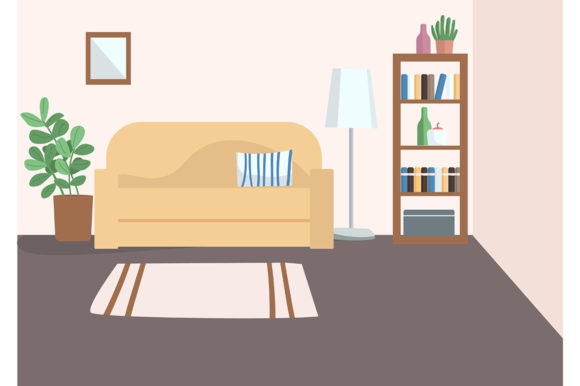
The concept of a "flat color" aesthetic has moved beyond mere trends to become a standard for modern user interfaces and web design. When applied to interior spaces, it offers a unique opportunity to visualize potential without the distraction of existing clutter. The inclusion of subtle elements like aroma sticks and decorative plants adds a layer of realism and warmth, transforming a sterile white box into a welcoming environment ready for customization.
The Core Characteristics of Flat Interior Illustrations
Understanding the anatomy of these illustrations is the first step toward utilizing them effectively. A typical Empty Spacious Room Flat Color Vector relies on geometric precision and solid blocks of color to define space. Unlike photorealistic renderings that depend on lighting engines and complex shaders, flat design uses distinct shapes to represent walls, floors, windows, and furniture (or the lack thereof).
- Simplified Geometry: Walls and architectural features are represented by clean lines and uniform shapes. This abstraction makes the image instantly recognizable as a room while maintaining a stylized look.
- Pastel and Neutral Palettes: To ensure versatility, these vectors typically utilize soft, neutral tones. These colors serve as a perfect backdrop for text overlays, call-to-action buttons, or product placements.
- Strategic Details: The presence of items like aroma sticks and a single decorative plant provides scale and context. They suggest human presence and comfort without overcrowding the scene.
- Vector Scalability: Because the image is built using mathematical paths rather than pixels, it can be resized from a small mobile icon to a massive billboard without any loss of quality.
This combination of minimalism and detail creates an atmosphere that is both inviting and functional. It captures the essence of a cozy apartment 2D cartoon interior with no furniture on background, allowing the viewer's imagination to fill in the blanks regarding what might happen in that space.
Practical Applications Across Industries
The utility of an empty room illustration extends far beyond simple decoration. Its primary value lies in its ability to act as a container for information. Whether you are building a website, creating a presentation, or designing marketing materials, the need for a clear visual hierarchy is paramount.
Digital Marketing and Advertising
In the world of real estate and interior design, showing a property in its raw state can be more powerful than a fully furnished one. An Empty spacious room flat color vector illustration serves as a perfect metaphor for new beginnings, renovation potential, or the "blank slate" concept. Real estate agents can overlay their own furniture renders onto these spaces to show staging possibilities. Similarly, moving companies use these images to symbolize the transition phase—leaving the old behind and filling the new space with personal memories.
E-Commerce and Product Placement
For e-commerce platforms, product photography often requires a consistent background. Using a flat vector illustration of a room allows brands to place their products within a contextual setting without the cost of physical photoshoots. Imagine selling a smart home device; placing it in a digital room with a decorative plant and aroma sticks suggests how the product fits into a lifestyle. The absence of other furniture ensures that the customer's attention remains fixed on the product being showcased.
Education and Infographics
Educators and researchers frequently need to explain concepts related to architecture, psychology, or spatial planning. A vector illustration of a large accommodation room provides a neutral ground for adding diagrams, measurements, or annotations. Students studying interior design can use these files to practice layout skills, learning how to arrange furniture in a virtual environment before committing to a physical purchase.
Technical Advantages of Vector Formats
The format of the asset is just as critical as the design itself. The availability of a ZIP file containing EPS, JPG, PNG, SVG, and AI formats ensures compatibility across every stage of the creative workflow. Each format serves a specific purpose, offering flexibility that raster-only images cannot match.
The SVG (Scalable Vector Graphics) format is particularly valuable for web developers. It allows for direct embedding into HTML code, ensuring that the image loads instantly and scales perfectly on high-resolution Retina displays. Furthermore, SVGs can be manipulated via CSS, allowing designers to change the color of the walls or the plant dynamically based on user interaction or theme settings.
For print professionals, the EPS (Encapsulated PostScript) and AI (Adobe Illustrator) files are essential. These formats preserve the editable layers, enabling users to modify individual elements. If a designer needs to change the color of the aroma sticks to match a brand guideline, they can do so directly in the source file without needing to redraw the entire image.
The inclusion of JPG and PNG files caters to quick-turnaround needs. These raster formats are ready for immediate use in email campaigns, social media posts, or document headers where editing capabilities are not required. The PNG version, specifically, supports transparency, which is crucial for compositing the room illustration over different colored backgrounds.
Psychological Impact of Minimalist Interiors
Beyond technical specifications, there is a psychological dimension to using empty rooms in design. In a world saturated with visual noise, the human brain craves order and clarity. A cozy apartment 2D cartoon interior with no furniture on background triggers a sense of calm and possibility.
The "empty" aspect reduces cognitive load. When a viewer sees a fully furnished room, their brain automatically processes the arrangement of objects, the style of the decor, and the implied narrative. By removing the furniture, the designer removes these distractions. This allows the audience to project their own ideas onto the space. For example, in a corporate presentation about future growth, an empty room symbolizes untapped potential and the capacity for expansion.
The addition of aromatic elements like incense sticks and greenery introduces a sensory dimension to a visual medium. Even though the viewer cannot smell the aroma, the visual cue of burning sticks or lush leaves subconsciously evokes feelings of relaxation and well-being. This subtle touch transforms the space from a cold architectural diagram into a living, breathing environment.
Implementation Strategies for Creators
To get the most out of these assets, creators should adopt a strategic approach to integration. Here are several workflows that maximize the value of the Empty Spacious Room Flat Color Vector.
- Layer-Based Editing: Always start by opening the AI or EPS file. Keep the architectural elements (walls, floor) on a locked background layer. Create separate layers for the furniture placeholders and the decorative items. This separation allows for easy swapping of elements later.
- Color Harmonization: Use the color picker tool to sample the dominant hues from the vector. Apply these colors to your text, buttons, and icons to create a cohesive visual identity. The flat color palette is designed to work harmoniously, so slight adjustments can align the image with any brand scheme.
- Text Integration: Place headlines within the negative space of the room. The large accommodation room provides ample wall space or floor area for typography. Avoid placing text over the decorative plant or aroma sticks, as these details add texture that can reduce readability.
- Animation Possibilities: With the SVG format, you can animate the smoke from the aroma sticks or the swaying of the plant leaves. This brings the static illustration to life, increasing engagement rates on landing pages and interactive presentations.
Considerations for Professional Use
While these illustrations offer immense benefits, there are considerations to keep in mind when incorporating them into professional projects. First, consistency is key. If a project uses multiple vector assets, ensure they share the same line weight, perspective, and color temperature. Mixing a flat-style empty room with hyper-realistic 3D furniture can create a jarring visual dissonance.
Secondly, cultural context matters. While a minimalist room is generally universally appealing, the specific choice of decor can carry meaning. For instance, certain types of plants or incense may have specific cultural associations. Ensure that the decorative elements align with the intended message and audience demographics.
Finally, accessibility should never be overlooked. When using these images in web applications, always provide appropriate alt text describing the scene. Instead of simply saying "room," describe it as "A flat color vector illustration of a spacious, unfurnished room with a potted plant and aroma sticks, suitable for real estate marketing."
The Future of Digital Spaces
As we move further into the digital age, the demand for scalable, adaptable, and aesthetically pleasing graphics will only increase. The trend towards flat design shows no signs of slowing down, driven by the need for fast-loading websites and responsive user interfaces. The Empty spacious room flat color vector illustration represents a convergence of artistic style and technical efficiency.
It bridges the gap between abstract concepts and concrete visualization. For businesses, it offers a cost-effective way to communicate complex ideas about space and potential. For artists, it provides a foundation upon which creativity can flourish. Whether used for a startup pitch deck, a real estate listing, or an educational infographic, this asset proves that sometimes, less is indeed more.
The versatility of the included file formats—from the editable vector sources to the ready-to-use rasters—ensures that these illustrations fit seamlessly into any workflow. By leveraging the clean lines and warm touches of aroma sticks and plants, designers can create environments that feel both modern and inviting. As the digital landscape continues to evolve, the ability to manipulate and adapt such high-quality vector assets will remain a core competency for successful creatives and communicators.
In conclusion, the decision to utilize an empty room vector is a strategic one. It prioritizes clarity, scalability, and emotional resonance. By understanding the nuances of this art form and applying it thoughtfully, professionals can elevate their visual communication to new heights. The blank canvas awaits, ready to be filled with the next great idea.