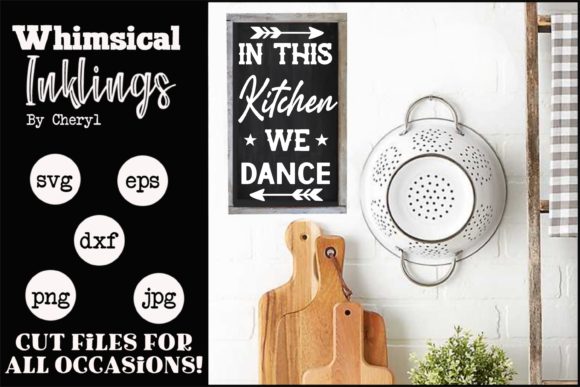
In This Kitchen We Dance
The kitchen is often the most dynamic space in a home or business, serving as a hub for preparation, collaboration, and creativity. When you introduce the phrase In This Kitchen We Dance, you are doing more than adding a decorative element; you are establishing a culture of movement, joy, and efficiency within that specific workflow. Whether you are a professional chef managing a high-volume restaurant, a small business owner designing a branded workspace, or a hobbyist looking to personalize a craft room, this saying acts as a strategic anchor for your environment.
Creating a custom sign with this text allows you to translate an abstract concept of productivity and happiness into a tangible asset. The inclusion of arrows and stars in the design file is not merely aesthetic; it serves as a visual guide that directs attention and adds energy to the space. By integrating this cut file into your projects, you align your physical environment with your operational goals, ensuring that the atmosphere supports the work being done.
Strategic Preparation and File Compatibility
Before you begin the execution phase of any crafting project, the foundation lies in preparation. The success of a custom sign depends heavily on the technical compatibility between your design assets and your production tools. The In This Kitchen We Dance package is delivered in multiple formats: PNG, SVG, EPS, and DXF. Understanding the distinct role of each format is crucial for maintaining quality control throughout your workflow.
SVG (Scalable Vector Graphics) files are typically the gold standard for digital cutting machines like Cricut or Silhouette. Because they are vector-based, they allow for infinite scaling without losing resolution. If you are planning to produce signs in various sizes, from a small countertop plaque to a large wall decal, starting with the SVG ensures that the crispness of the letters and the precision of the arrow details remain intact regardless of the output dimensions.
For users working with industrial-grade plotters or laser engravers, the EPS and DXF formats provide the necessary compatibility. These files are essential for professionals who need to integrate the design into larger CAD workflows or manufacturing pipelines. They ensure that the geometry of the stars and arrows translates accurately to the machine's toolpath, preventing errors during the cutting process.
The PNG format serves as a versatile raster option, ideal for quick previews or for use in software that does not support vector manipulation. However, for high-quality signage, relying solely on PNG can lead to pixelation if the image is enlarged beyond its native resolution. A robust workflow involves keeping the vector source (SVG/EPS/DXF) as the master file and generating the PNG only for temporary visualization or specific print-on-demand applications.
Ensuring your cutting machine supports one of these formats is the first critical step in the implementation plan. Mismatched file types can lead to wasted materials, extended production times, and subpar final products. Verify your software capabilities before purchasing or downloading assets to streamline the transition from digital design to physical reality.
Integrating Design into Workflow Environments
Once the technical requirements are met, the focus shifts to how the sign fits into the broader environment. In a professional setting, such as a bakery or a catering company, signage plays a vital role in brand identity and staff morale. Placing a sign that reads In This Kitchen We Dance above the prep station can serve as a psychological cue for the team. It signals that while the work is serious, the approach should be energetic and collaborative.
This integration extends beyond mere decoration. The arrows included in the design can subtly direct foot traffic or highlight specific zones within the kitchen. For instance, an arrow pointing toward the loading dock or the dishwashing area can act as a visual management tool, reducing confusion and improving flow. The stars add a layer of recognition, marking areas of excellence or celebrating milestones achieved by the team.
For entrepreneurs and freelancers working from home, the kitchen often doubles as a creative studio or a meeting space. A well-crafted sign transforms a functional area into a dedicated zone of inspiration. It sets boundaries between "work mode" and "life mode," helping professionals maintain focus while acknowledging the need for breaks and movement. The presence of the sign reminds everyone entering the space that creativity requires a rhythm, much like dancing.
Execution and Material Selection
The execution phase involves selecting the right materials to bring the design to life. The choice of material impacts durability, aesthetics, and the overall message of the sign. For high-traffic kitchens where moisture and heat are factors, materials like acrylic, vinyl, or treated wood are superior choices. They withstand the rigors of daily use while maintaining the clarity of the text and graphics.
If you are creating decals for appliances or glass surfaces, adhesive vinyl is the preferred medium. The detailed nature of the arrows and stars in the In This Kitchen We Dance file requires a high-quality vinyl that can handle fine cuts without tearing. Proper weeding—the process of removing excess vinyl—is essential here. Taking the time to carefully weed the design ensures that the delicate star points and arrow tips remain sharp and defined.
For wooden signs, the process involves transferring the vector path to the wood surface. Using a router or a laser cutter with the DXF or SVG file allows for precise engraving or cutting. This method creates a tactile element that adds depth to the sign. The contrast between the engraved lines and the natural wood grain enhances the visibility of the text, making it readable from a distance.
Consistency is key when producing multiple units. If you are a business owner ordering bulk signs for a chain of locations, consistency in color, font weight, and graphic placement is non-negotiable. Establishing a standard operating procedure (SOP) for the production of these signs ensures that every location reflects the same brand values and quality standards. Regular quality checks should be performed to verify that the cutting machine has maintained its calibration and that the materials have not degraded.
Long-Term Value and Adaptability
The utility of a custom sign extends well beyond its initial installation. As workflows evolve and spaces are reconfigured, the sign remains a flexible asset. Unlike digital content that may require constant updates, a physical sign provides a permanent statement of intent. The phrase In This Kitchen We Dance is timeless because it celebrates the universal human experience of finding rhythm in routine.
Furthermore, the versatility of the file formats allows for adaptation across different media. You can take the original SVG file and repurpose it for social media graphics, email headers, or marketing collateral. This cross-platform usage reinforces the message and creates a cohesive brand identity. The ability to scale the design means you can use the same core asset for a small sticker on a laptop and a large banner at a trade show.
Organizing your digital assets is just as important as the physical production. Keep a structured folder system for your design files, separating them by format and project type. This organization facilitates easy retrieval and modification, saving valuable time when you need to update a design or create a variation. For example, if you decide to change the color scheme for a holiday promotion, having the layered SVG file ready allows for rapid adjustments without redesigning the entire composition.
Ultimately, the goal is to create an environment that fosters efficiency and joy. By thoughtfully implementing the In This Kitchen We Dance sign, you are investing in the culture of your space. It is a practical decision that yields emotional returns, reminding everyone who enters that work can be done with passion and style. Whether you are a marketer testing a new campaign, a teacher preparing a classroom, or a creator building a brand, this simple yet powerful addition to your toolkit helps bridge the gap between planning and execution.
The process of acquiring, preparing, and installing the sign is a microcosm of effective project management. It requires understanding the tools, respecting the constraints, and focusing on the end result. When executed correctly, the sign becomes more than a piece of decor; it becomes a symbol of the workflow itself. It stands as a testament to the idea that even in the most demanding environments, there is room for movement, creativity, and a little bit of dance.
By adhering to best practices in file management, material selection, and quality control, you ensure that the final product meets the highest standards. The result is a durable, visually appealing sign that enhances the functionality and atmosphere of your kitchen. It is a practical solution for those who value both form and function, proving that thoughtful design can elevate everyday tasks into something extraordinary.